Note November 24, 2026
Pocket mesh radios for my friends
I designed a pocket case for a tiny off-grid radio board, and most of the path from idea to printed part ran without me at the keyboard. A few of them are headed to close friends.
I picked up a pair of small radio boards, Heltec V4s, that send text messages over LoRa, a long-range, low-power radio that needs no cell tower and no internet. You pair one with your phone and type as usual, and the message hops from radio to radio across a mesh. Seattle has a growing community running one. Out of the box the board is a bare circuit board with a little screen and an antenna on a wire. I wanted something that lives in a jacket pocket.
So it got a case. The battery is wider than the board, so the board rides on two rails above it, and the battery slides in from underneath behind a door that clicks shut. The door carries my Layered Logic mark.
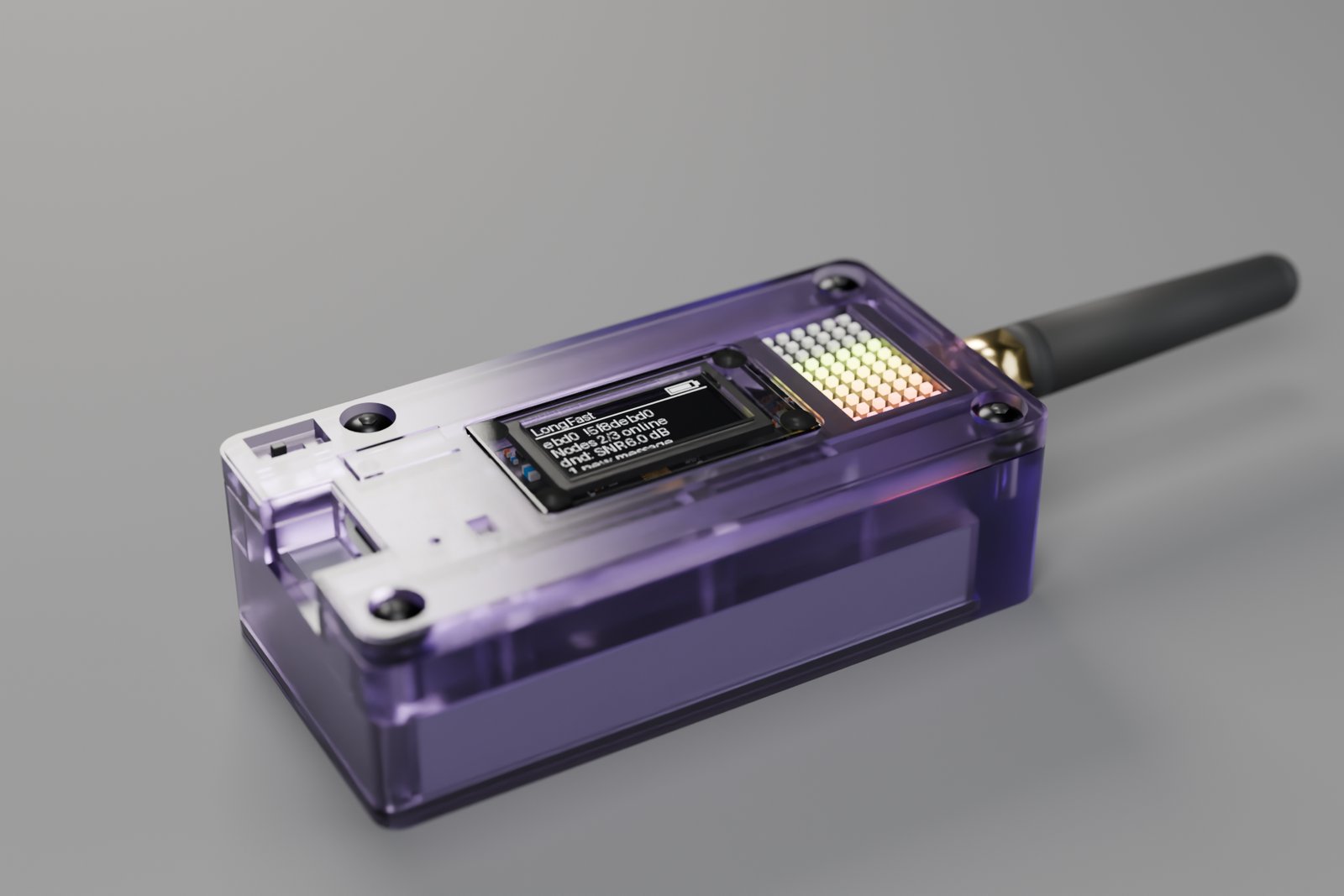
An early render, from day two. The real one has changed a lot since.
The interesting part is how little of it I did by hand. I described what I wanted in plain words, and Claude Code wrote the case as a Python generator built around the manufacturer’s 3D model of the board. The same files then flow through the whole chain. A checker makes sure nothing collides. A slicer runs headless and gates compare its toolpath against the model, so a dropped feature gets caught before it prints. When I say go, the printer runs it, a camera checks the bed first, snapshots come in as it prints, and a card on my phone asks how it came out. Blender turns the same files into the purple pictures in this note. My jobs were deciding what to build, saying go, and measuring what came out.
Measuring turned out to be the job that matters. Over three days it came to about a dozen prints, starting with just the two ends of the case cut off as test pieces, and the main body is on its sixth version. Most of the misses were numbers the loop had guessed. The power switch was placed from a drawing on its product listing, and the real knob sat 2 mm deeper than drawn, so it was almost impossible to flip. The buttons were drawn as 5 mm squares, and my calipers said 6. Others you only find by holding the thing. The little LED panel on the face had nothing holding it at all in the first full print; I’d taped it in. Version five had ledges about 1 mm wide under it, which I described at the time as “barely any overlap.” Version six has 2.6 mm ledges and a strip of foam, and it finally sits snug.
One failure had nothing to do with the case. The first full print wouldn’t start because the garage lights had timed out and the bed camera couldn’t see anything. Home Assistant now keeps the lights on while that printer works.
The LED panel is a 6 by 10 grid of color lights, used as a status light. It blinks for messages, shows a signal meter for favorite contacts (so it doubles as a range tester), and has a battery gauge and an emergency flashlight. Two buttons on the end open a list of preset messages that send without the phone, something the stock firmware can’t do. Halfway through I switched firmware, from Meshtastic to MeshCore, because the local mesh has moved new deployments there. The light bar code lives in a repo a few friends and I share, and it was merged there today.
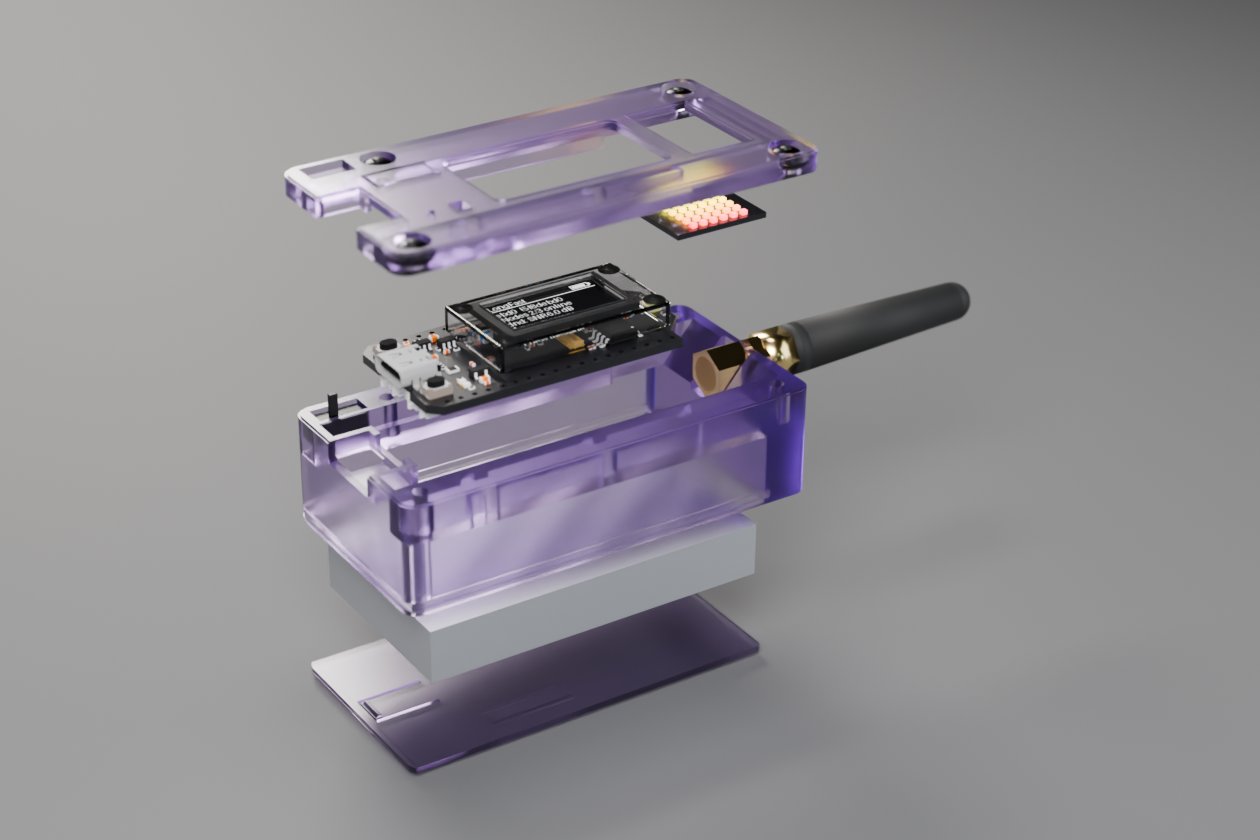
The piece I’m happiest with is the assembly manual, because it became a reusable skill instead of a one-off. It’s styled after the Voron printer manuals I’ve built from: line drawings rendered from the real geometry, numbered steps, a parts list, and for anything with wires, a wiring section cut from the board’s pin map. You describe a build once, as steps and subassemblies, and it does the rest, including a PDF. Before it draws a page it slides every part in along the path the drawing shows. On this case that caught a mistake in my own instructions: I had the battery going in before the antenna connector, and the connector’s only way in runs right through where the battery sits. This one came out at 32 pages, and after a design change the whole thing redraws itself in about three minutes.
The step I’m least sure about is the last one, turning something like this into a product other people can print or buy. Most of the pieces exist now, renders good enough for a listing and a manual someone else can build from. Even this note started as a draft written from the session logs. I just haven’t pointed the loop at a listing yet.
For now, a few of these are going to close friends. They’re designed as pocket radios, and I fully expect most of them to end up living on desks and windowsills, which is why the case takes a screw-on antenna and a tilting one is on my list. Still not done: the lights and buttons aren’t wired yet, so everything I’ve described them doing has only run in tests on my PC.
Get notified
Leave an email and I'll ping you when a new note goes up. No other mail, ever. Prefer feeds? RSS works too.